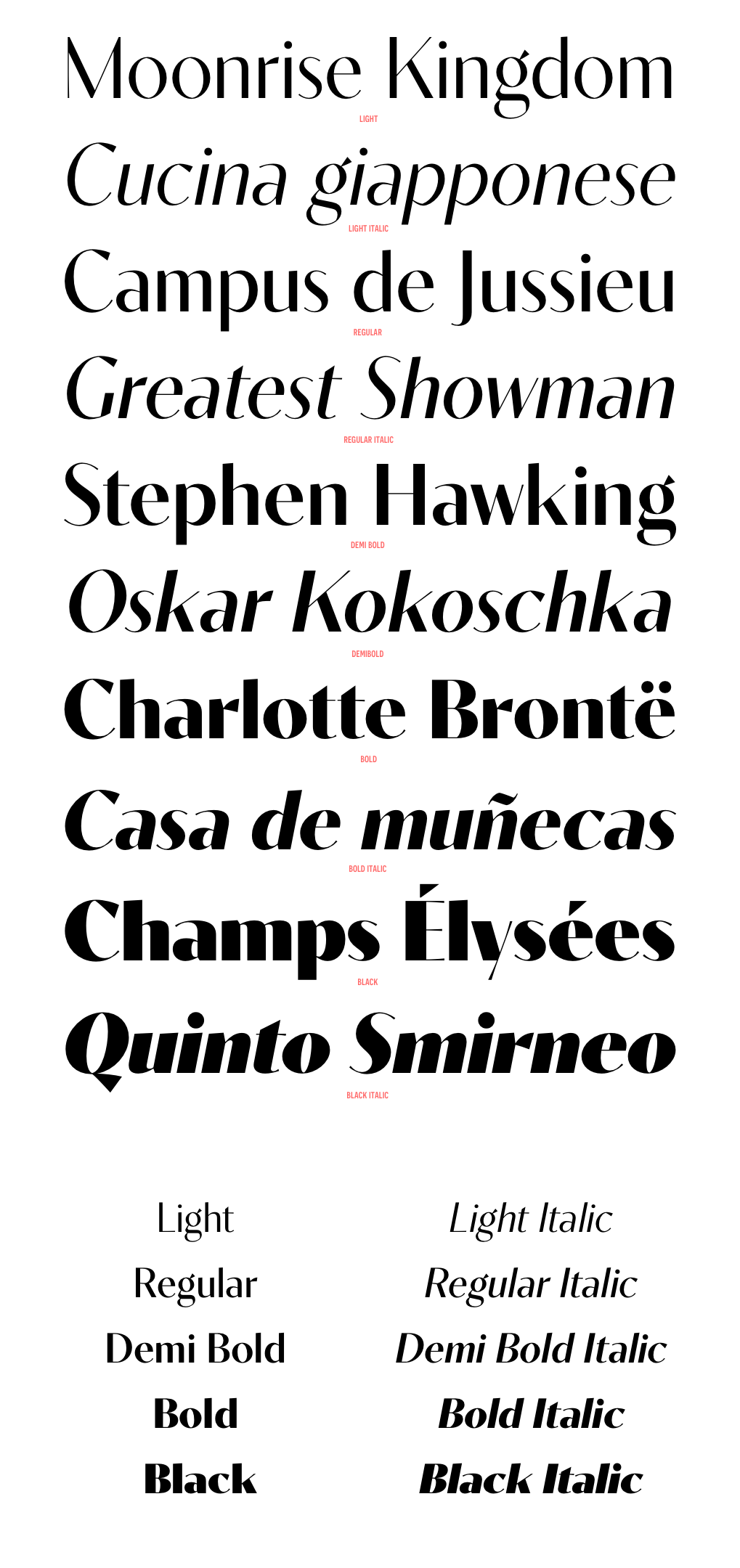
Contralto is a high contrast sans-serif font family, crafted to look elegant but contemporary thanks to soft humanist shapes mixed with sharp geometric details.
Contralto comes in 40 styles: 5 weights × italics × 4 optical sizes, to help optimising contrast and readability. However, you can also use them to fine tune the mood of your graphical composition.
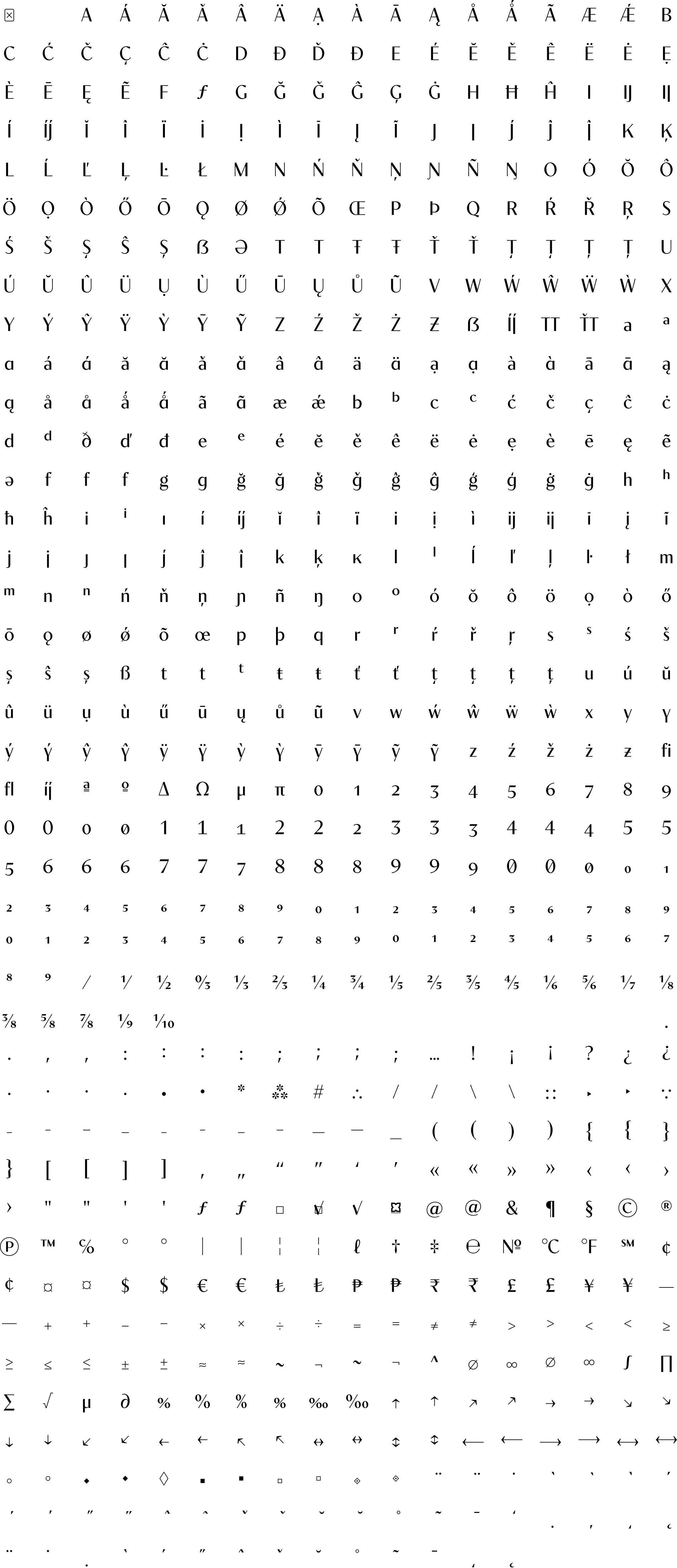
Contralto’s generous character set and Opentype features let you meet the most demanding layout needs and lets your creativity fly!
Download the Contralto Specimen --> 
Naisenkaari 1997 Okru <99% TRUSTED>
For Naisenkaari , Luostarinen assembled a dedicated and talented crew. The film's stunning visuals were captured by cinematographer Maiju Leppänen, while the evocative score was composed by Päivi Takala. The film was produced by Mikael Wahlforss and his company Epidem Oy and had its world premiere on February 14, 1997, at the Nordic Glory Festival in Jyväskylä, Finland. It was later given a general theatrical release on March 28, 1997.
Since you have a specific link or search result in mind, you likely already have access to the file. However, if you are looking for confirmation of the content:
First, a linguistic breakdown. is a Finnish compound word. Nainen means "woman" or "wife," and kaari translates to "arch," "curve," "bow," or "span." Together, the title evokes poetic imagery: The Arch of a Woman , The Woman’s Curve , or metaphorically, The Arc of a Woman’s Life . naisenkaari 1997 okru
Naisenkaari 1997, a report published by OKU (Oikeuksien Tukeaksesi ry), a Finnish organization focused on promoting and supporting the rights of women, marked a significant milestone in the advocacy for women's rights in Finland. The report, which translates to "Women's Circle 1997" in English, provided an in-depth analysis of the status of women in Finland during that period, highlighting the challenges they faced and proposing solutions to address these issues.
The keyword extension typically points to internet communities, streaming platforms, or digital archives where historical, global cinema, and indie documentaries are preserved and discussed by cinephiles. Production Overview Naisenkaari (1997) | IDFA Archive For Naisenkaari , Luostarinen assembled a dedicated and
Why would a Finnish 1997 film end up on a Russian social media site? Several theories exist among digital archivists and “lost media” hunters:
This essayistic, highly intimate documentary examines the lifelong relationship between women and their bodies, tracking the journey from girlhood through blooming, aging, and death. Today, archival and foreign cinema enthusiasts frequently search for the film on platforms like OK.ru to bypass regional distribution gaps and stream this rare masterpiece of feminist filmmaking. What is Naisenkaari (1997)? It was later given a general theatrical release
The year 1997 stood on a precipice. It was the twilight of the analog world and the dawn of the digital ubiquity that platforms like Ok.ru would later come to represent. In this specific historical moment—somewhere between the crumbling of the Soviet Union’s long shadow and the rise of the global internet—a documentary or artistic project titled Naisenkaari (The Woman’s Arc) emerged. To revisit this piece today is not merely to watch a document of the past; it is to witness a meditation on the biological and spiritual sentence of time.