Https---www.filmyzilla.com.jm-sitemap.xml-nlwhcvsxls4-mocsz9s6i ((install)) Info

Welcome to the ClusterDuck Protocol – an innovative open-source firmware empowering wireless IoT devices using LoRa technology. Explore endless opportunities to create fully customizable sensor and communication networks and redefine your IoT experience.

https---www.filmyzilla.com.jm-sitemap.xml-NlwHcvsxls4-MOcsZ9s6i

What is the CDP?

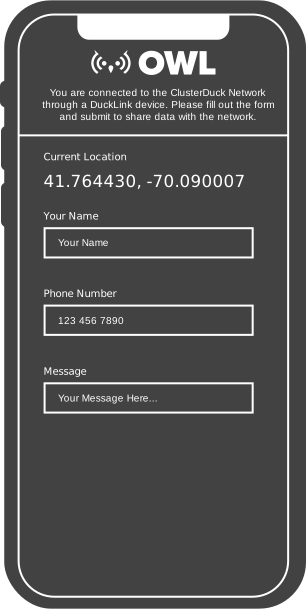
In 2017, Hurricane Maria, a category-5 storm, severely impacted Puerto Rico, demolishing homes and communication infrastructure. To address this issue, the ClusterDuck Protocol (CDP) was developed in 2018. It utilizes battery-powered Internet-of-Things devices to reestablish essential communication during emergencies, allowing civilians to request assistance, share their locations, and receive vital information from local governments and responders.

https---www.filmyzilla.com.jm-sitemap.xml-NlwHcvsxls4-MOcsZ9s6i

Get the
Hardware

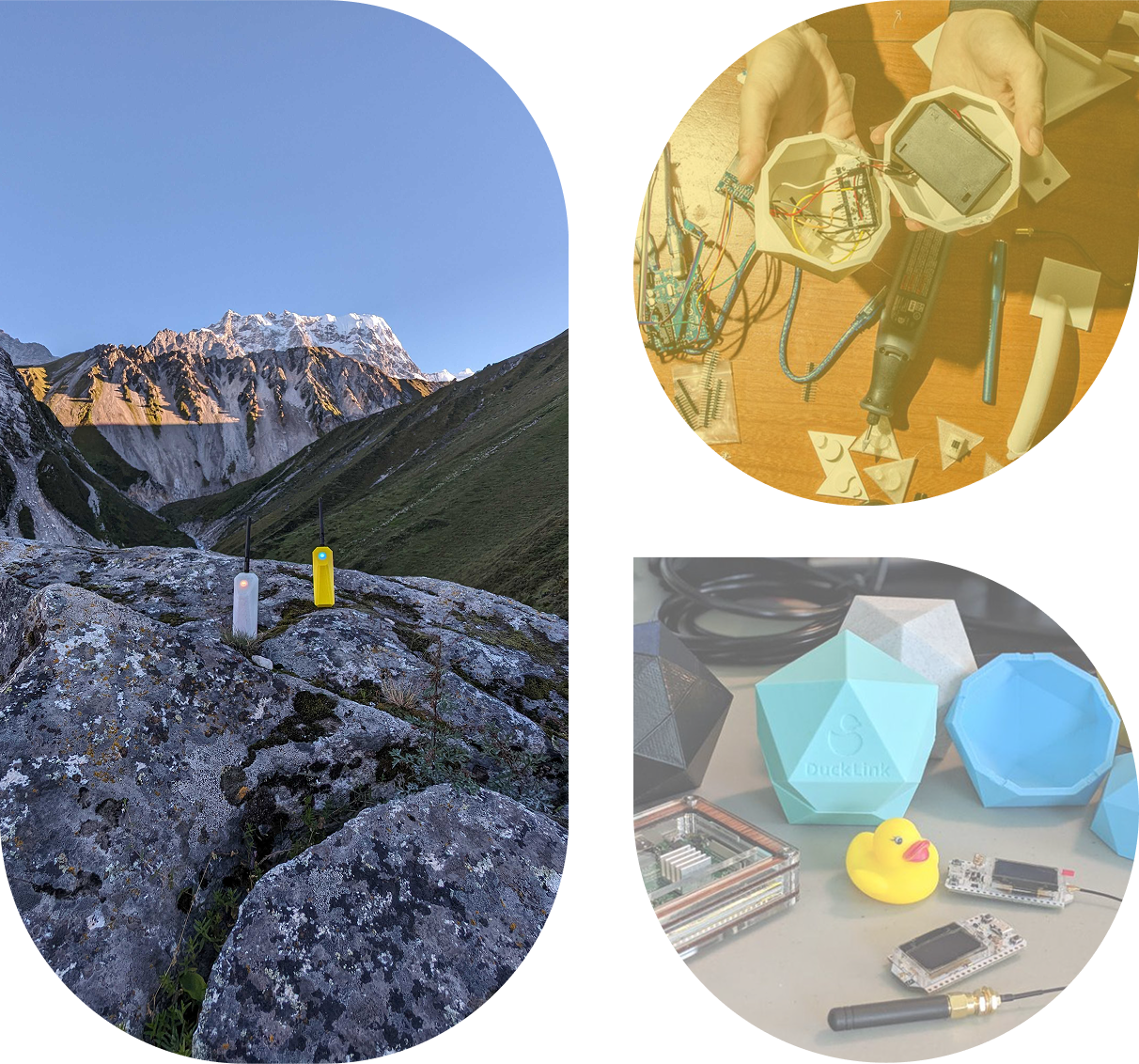
The ClusterDuck Protocol runs on a variety of IoT hardware, including many ESP32 Arduinos.

Here is a list of hardware we use, though there may be many others that work. We recommend the Heltec LoRa ESP32 and the TTGO T-Beam ESP32.

For a simple network you will want to make at least two Ducks. For bigger networks you will need more.

https---www.filmyzilla.com.jm-sitemap.xml-NlwHcvsxls4-MOcsZ9s6i

Get the
Software

To start developing, you will need PlatformIO on your computer.

Download or git clone the CDP library from GitHub.

Follow the installation instructions here

Please Note: With the Release of the ClusterDuck Protocol Version 4 we have different instructions. If you are looking for older instructions please go here

https---www.filmyzilla.com.jm-sitemap.xml-NlwHcvsxls4-MOcsZ9s6i

Set Up the
Network

Connect your board to platform IO

Follow the these updates instructions for loading up a Duck to get one running.

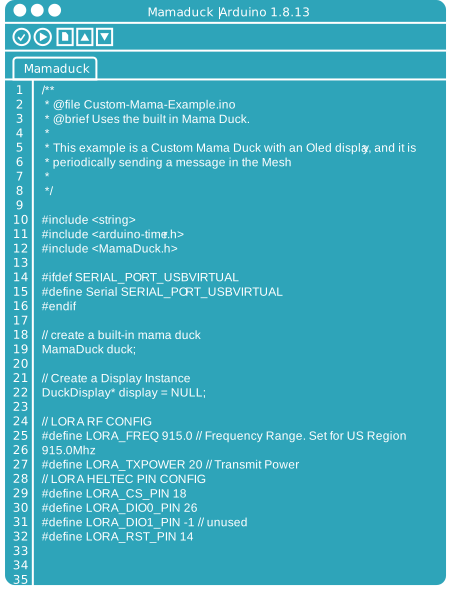
Use the pre-built examples or develop custom Ducks of your own.

Deploy!

Https---www.filmyzilla.com.jm-sitemap.xml-nlwhcvsxls4-mocsz9s6i ((install)) Info

: Sites like this often host thousands of pages. High-capacity sitemaps help manage large databases by breaking them into smaller XML files (often capped at 50,000 URLs each) to avoid server timeouts.

The long, strange keyword we’ve dissected today – https---www.filmyzilla.com.jm-sitemap.xml-NlwHcvsxls4-MOcsZ9s6i – is a digital fossil of an attempted pirate operation. It tells a story of evasion, obfuscation, and the ongoing struggle between free access and copyright law. But the takeaway is simple: : Sites like this often host thousands of pages

The technical string "https---www.filmyzilla.com.jm-sitemap.xml-NlwHcvsxls4-MOcsZ9s6i" represents a segmented, hashed sitemap file used by large-scale media indexing platforms to manage vast amounts of content. These dynamically generated XML structures allow high-volume platforms to update search engines in real-time, facilitating rapid indexing and traffic acquisition. This infrastructure often operates through rapid domain migrations and Automated Content Ingestion, posing significant security risks to users, including malicious ad redirects and malware distribution. To learn more, research the infrastructure behind third-party file indexers and their reliance on dynamic sitemap generation. Share public link It tells a story of evasion, obfuscation, and

The keyword https---www.filmyzilla.com.jm-sitemap.xml-NlwHcvsxls4-MOcsZ9s6i is more than just a random string. It represents a cat-and-mouse game between pirates and enforcers. By studying these patterns, security researchers can: security researchers can: However

However, I can provide you with a text explaining the context of such links, the nature of the website involved, and the associated risks.

Join more than a thousand developers that use The ClusterDuck Protocol.
https---www.filmyzilla.com.jm-sitemap.xml-NlwHcvsxls4-MOcsZ9s6i

Installation Manual

A step-by-step guide on how to build your own ClusterDuck Protocol network on our GitHub repository

https---www.filmyzilla.com.jm-sitemap.xml-NlwHcvsxls4-MOcsZ9s6i

Video Tutorials

Go and check out this playlist with all the installation vidoes of the clusterduck Protocol

https---www.filmyzilla.com.jm-sitemap.xml-NlwHcvsxls4-MOcsZ9s6i

QuackPacks (Integrations)

QuackPacks are plug-and-play add-ons that give Ducks new features, like sensors, hardware, or networking tools.

OWL Built the CDP to help improve global resilience through connectivity.

In March 2020, The Linux Foundation and OWL formed a partnership to open-source the ClusterDuck Protocol. Learn more about TLF.

The IBM Call for Code is a technology competition empowering developers worldwide. Stay tuned for latest competitions and updates.